Accreditation is a Game Changer
Cut out the middlemen, lower your costs and gain access to difficult domain extensions.
20 Nov 2024
Read now


Look closely at almost any established brand and you will notice small symbols sitting quietly next to names and logos:
a B in a circle
a C in a circle
an R in a circle
a TM
These marks are easy to ignore, but they are far from meaningless. In many cases, they are designed to communicate legal rights, ownership or credibility, all in a single character.
For businesses and consumers alike, these symbols act as shortcuts. They provide quick clues about whether a brand is protected, whether creative work is owned, or whether a company has been independently verified against a set of standards. Some of these marks relate to Intellectual Property. Others signify compliance and ethics.
This guide explains the most common symbols you will encounter, what they mean and why they matter when evaluating who to partner with.
Symbols next to brand names are not there for decoration. They exist because the modern marketplace is crowded, fast moving, and often confusing. Customers want to know who they are buying from are authentic. Businesses want to protect the value they have built. Partners want confidence that the companies they work with are legitimate and aligned.
In that context, these symbols provide immediate clarity. They help distinguish between a brand that has formal protection, one that is claiming rights informally, one that owns creative work and one that has been assessed against recognised ethical or sustainability standards. When you understand what they mean, you can make better decisions faster and reduce the risk of confusion, misuse or misalignment.
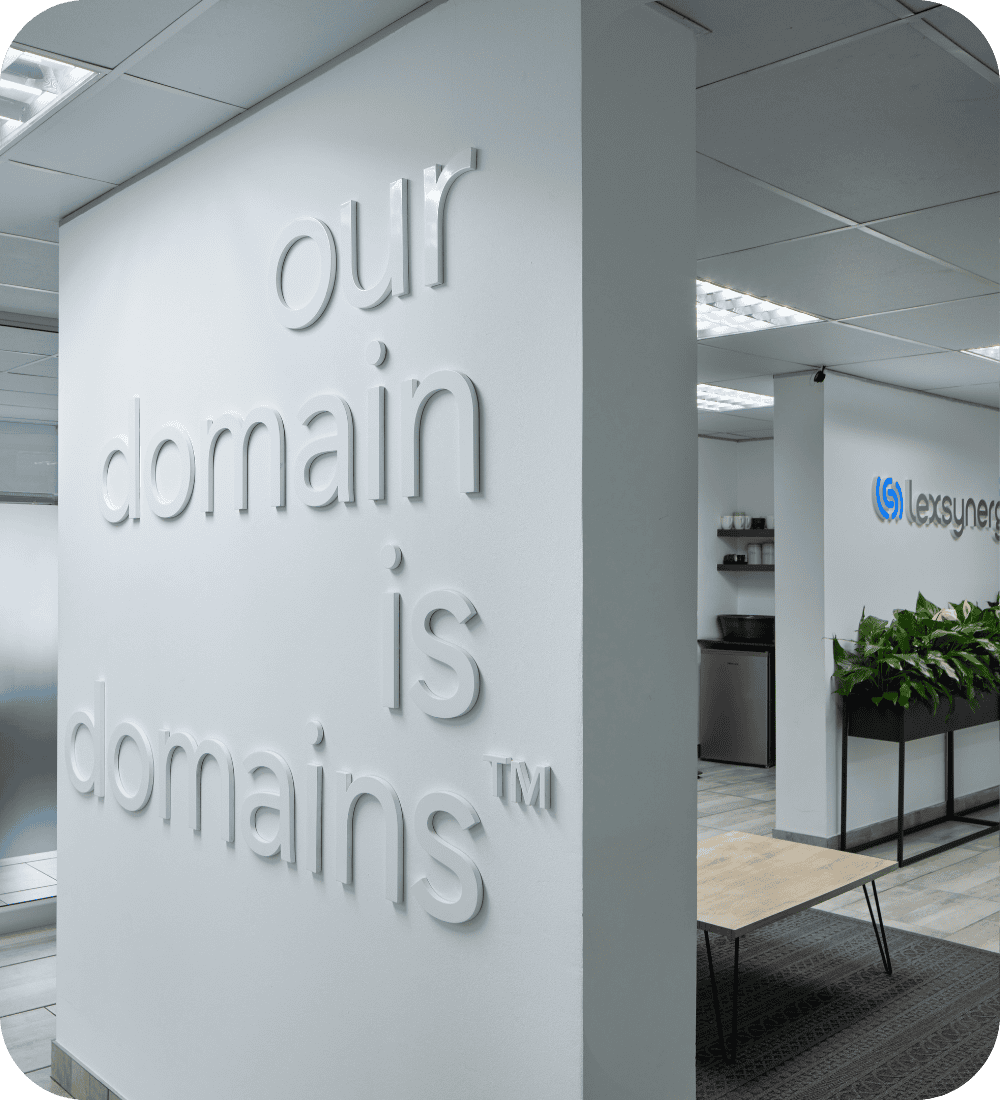
The ™ symbol stands for trade mark. It is a sign through which the goods or services of one business can be distinguished from those of another. It may consist of words, logos, letters, numerals, shapes, colours, sounds, or any combination thereof, provided it is capable of being represented clearly and precisely.
Registration of a Trade Mark grants the owner exclusive rights to use it in relation to the goods or services for which it is registered. It also allows them to take legal action against others who use it without permission which may cause confusion or dilute the brand. Trade Marks must be distinctive, not descriptive and must not conflict with earlier existing rights.
Importantly, ™ does not necessarily mean the trade mark is registered. In many cases it is used before formal registration, while an application is in progress, or even without any application being filed at all. That’s why ™ should be seen as a marker of intention and use rather than proof of legal protection.
For brand owners, ™ is still valuable. It can deter casual misuse and establish that the company considers their brand identity important. But in legal terms, it is not the same as registered rights.
The ® symbol indicates a registered trade mark. This means the brand name or logo has been formally registered with a government trade mark office in the relevant territory.
Compared with ™, ® carries much stronger weight because it reflects a legal status that has been granted through a defined process, making it much easier to enforce. In practical terms, registered trade marks can make it simpler to take action against both offline and online infringement, impersonation, or brand abuse.
However, it is important to note that ® should only be used in countries where the trade mark is actually registered. If your business operates in multiple countries, you should only use the ® symbol in each territory where registration has been granted and not in countries where the mark is still pending or unregistered.
For companies operating on a worldwide scale, having your trade mark registered in every country is not always doable or feasible. In those cases, businesses often prioritise registering in key markets, while using ™ for global communications.
The key difference is simple: ™ is a claim of trade mark use, while ® is confirmation that a trade mark has been registered.
The © symbol refers to copyright. Copyright is a form of legal protection granted to the creators of original works of authorship, including literary, artistic, musical, and certain other Intellectual Property works.
The protection of Copyright arises automatically upon the creation of a qualifying work and does not require registration, although in some countries, such as the United States, copyright can be registered. Copyright does not protect ideas, facts, or methods of operation, but instead protects the specific expression of those ideas, such as the text of a book, the melody of a song, or the visual design of an artwork. It provides the creator exclusive rights to use, reproduce, distribute, perform, display, and create derivative works based on the original work. These rights allow the creator to control how their work is used and to prevent unauthorised use or reproduction by others.
You will commonly see © on websites, in publications and on creative assets. It is especially important in industries where original content is a core business asset, but it applies broadly across almost all sectors today.
A less common symbol, ℗ (P in a circle), is typically used to indicate rights relating to sound recordings. It appears most often in music and media contexts, where ownership of recordings and licensing rights are important.
While it does not appear in most day to day commercial branding, it is still a relevant symbol to recognise, particularly for businesses working in audio, podcasting, publishing, and digital media.
The ℠ symbol stands for service mark. It is similar to ™ but is traditionally used for services rather than products. It is more commonly used in the United States.
In practice, many businesses simply use ™ even for services, so ℠ is not always widely displayed. But when you do see it, it indicates the same core idea, the business is claiming brand identity rights through use, even if formal registration has not been completed.
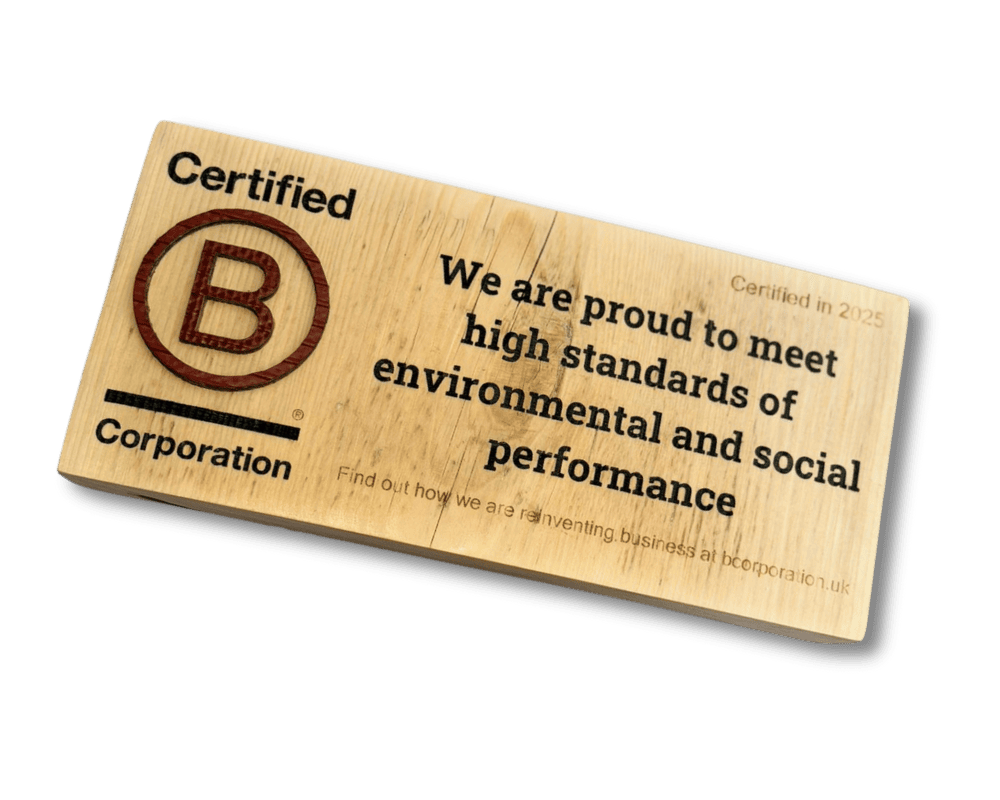
The Ⓑ symbol is often one of the most misunderstood marks because it does not fit into the trade mark or copyright category. It refers to the Certified B Corporation mark, commonly known as the B Corp symbol.
Unlike ™ or ®, the B Corp mark is not about brand ownership. It does not tell you that a company’s name or logo is legally protected. Instead, it tells you something about how the business operates. It signals that the company has been assessed against high standards of social and environmental performance, transparency and accountability.
This distinction matters because the B Corp mark is not a self declared claim. It is a third party certification that indicates the business has committed to being measured against a recognised benchmark.
If you want the simplest way to compare these symbols, the table below breaks it down clearly.
Symbol | Name | What it means | What it protects / proves | Who issues it? | Why it matters |
™ | Trade mark | The business is claiming a name/logo as a brand | Brand identity in use (not necessarily registered) | Used at the discretion of a business, | Signals brand intent, but legal strength may be limited |
® | Registered Trade mark | The trade mark is officially registered | Stronger legal rights over a brand name/logo |
The B Corp symbol is increasingly important because it answers a question that trade marks and copyright do not: What kind of business is this?
Trade marks and copyright protect assets. They safeguard names, logos, and creative works. They help brands defend what they own. The B Corp mark is different because it relates to what a company does and how it behaves. It is a signal that the business has chosen to be assessed against recognised standards rather than simply stating values and expecting others to take them on trust.
This is particularly relevant today, where businesses are scrutinised not just for what they sell but for how they treat employees, how they operate supply chains and how responsibly they approach their wider impact. The B Corp symbol has become a shorthand for commitment to accountability.
The symbols next to a brand name matter when you are deciding who to work with. Every partnership creates association. In an interconnected economy, businesses are increasingly judged not only on their own behaviour but on the ecosystem they support.
Partnering with a Certified B Corporation such as Lexsynergy can provide reassurance because it suggests the business has stronger governance, clearer accountability and a more structured approach to responsibility. That can reduce reputational risk and improve long term alignment. It is also a sign that the business is less likely to pursue short term wins at the expense of people, trust or sustainability.
Of course, B Corp status alone is not the only measure of whether a company is a good partner, but it is a meaningful indicator that the business has chosen transparency and measurement over vague claims.
Not all “symbols” you see in branding contexts relate to Intellectual Property or B Corp certification. Some are compliance or standards based marks that are easy to confuse with legal rights indicators.
For example, the CE marking is a compliance mark commonly found on physical products. It signals conformity with certain regulatory requirements, not brand ownership. Similarly, ISO certifications are widely used in B2B settings to demonstrate audited standards in areas like information security and quality management. These are not trade marks, but they are important trust signals.
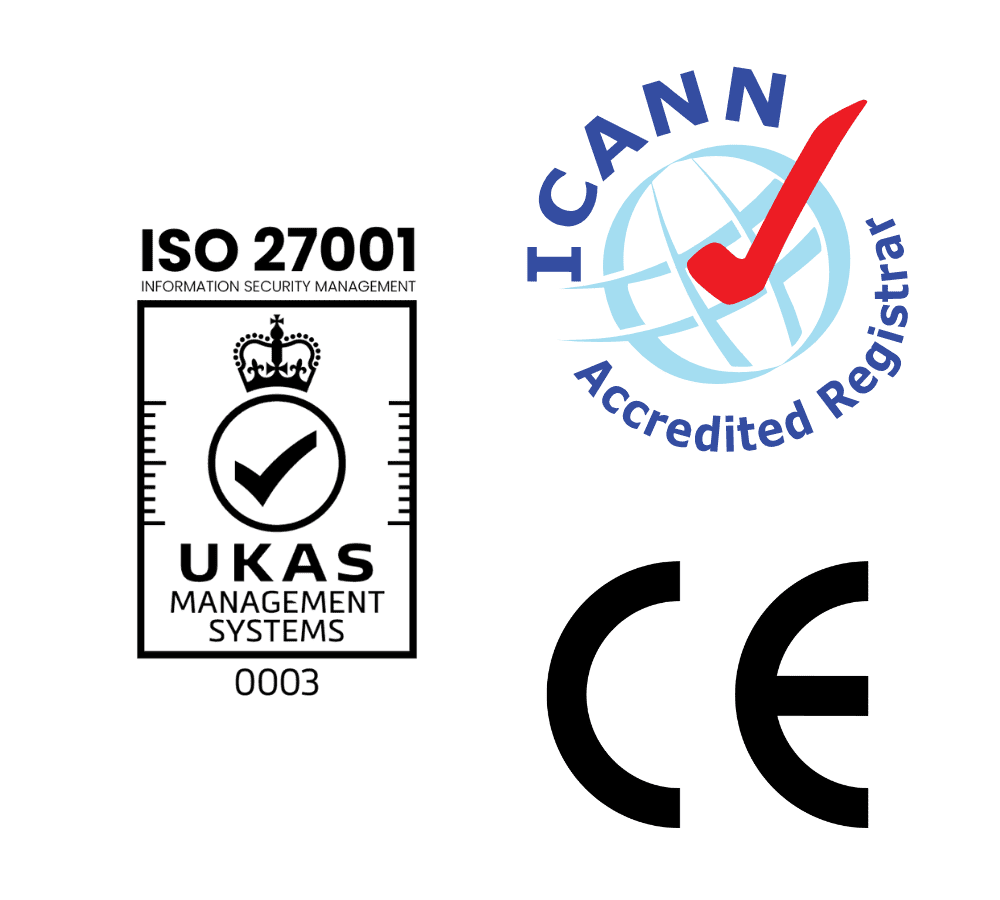
In the domain name industry, the ICANN Accredited Registrar logo is another mark that can be misunderstood. This logo does not indicate trade mark ownership or legal rights in a brand name. Instead, it shows that a company has been officially accredited by ICANN (the Internet Corporation for Assigned Names and Numbers) to operate as a domain registrar.
If a business is ICANN accredited, it means they meet ICANN’s requirements and are authorised to sell and manage domain names directly through the global domain name system. This accreditation is a trust and compliance signal, showing the registrar follows ICANN policies and standards (including rules around registration processes, customer protections, and dispute handling).
You will also often see recycling and sustainability symbols, many of which use circular arrow designs. These marks can be helpful, but they do not always represent third party certification. They may simply indicate recyclability or packaging guidance.
Understanding what category a symbol belongs to, ownership, compliance, or certification, is the key to interpreting it correctly.
The symbols next to brand names are small, but they carry weight. They are designed to communicate something quickly in a world where attention is limited and trust is valuable.
Trade marks and copyright symbols tell you about ownership and protection. They help you understand whether a brand identity or creative work is being claimed or formally registered. The B Corp symbol tells you something else: that the company has chosen to be assessed against standards for impact, accountability and transparency.
When you know what these symbols mean, you can make more informed decisions, whether you are building a brand, protecting one, or deciding which businesses deserve your trust and partnership.
At Lexsynergy, we do not just explain what these symbols mean, we hold them. As of writing, Lexsynergy are the first and only domain registrar globally to achieve B Corporation™ (B Corp™) Certification. In addition to the B Corp symbol, we also hold trade marks (™) registered trademarks (®) and copyright (©), reflecting both how we operate and how we protect our brand and original work. In an industry where trust is everything, these marks represent verified accountability, protected brand identity and long term commitment.
Cut out the middlemen, lower your costs and gain access to difficult domain extensions.
Elevate Your Domain Strategy with Cost-Effective, Business-Focused Solutions.
Reduces brand confusion risk and supports enforcement |
© | Copyright | Original creative work is protected | Written content, designs, artwork, code, media | Automatically exists (registration optional depending on country) | Confirms ownership of content and assets |
℗ | Sound Recording Copyright | Rights exist over a sound recording | Audio recordings (music, podcasts, etc.) | Automatically exists (varies by territory) | Important for licensing and usage rights in media/audio |
℠ | Service Mark | Like ™, but for services (mainly US) | Service brand identity in use | The business itself | Adds clarity, especially for service based brands |
Ⓑ | Certified B Corporation | The business meets verified standards for impact, transparency, accountability | How the business operates (people, planet, governance) | B Lab (third party certification) | Signals long term responsibility and trust in how a partner behaves |

What is the difference and which should you be using?