
Domain Name Escrow: A Secure Solution
Understand how the Domain Escrow Process protects both buyers and sellers with our step by step break down.
27 May 2025
Read now



When most people think of domains, they picture a simple web address, but for businesses, a domain is far more, it is a digital asset, an online trade mark at the cornerstone of a brands identity. Like any asset, domain names have a lifecycle, following a journey that if misunderstood, can lead to costly consequences.
Whether you are registering your first domain or managing hundreds in a global portfolio, knowing how the domain lifecycle works is crucial. In this simple guide, we break down each stage of the domain lifecycle, highlighting the tweaks that can be made to protect your brand and your bottom line.
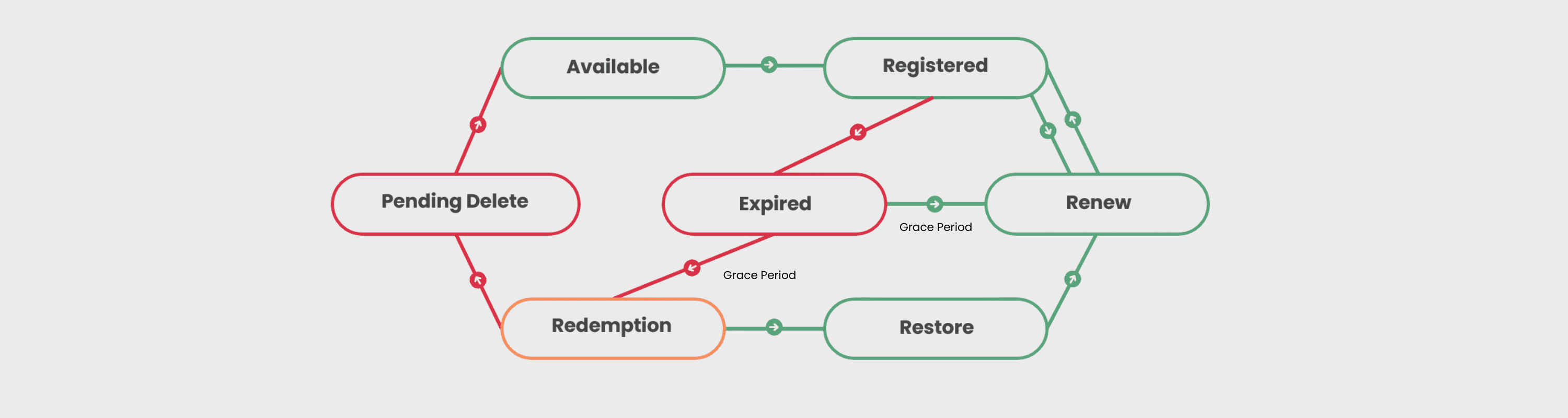
The lifecycle begins when a domain is Available for registration. At this point, anyone can register it through an accredited registrar such as Lexsynergy.
Once Registered, the domain is owned by the registrant for the period purchased, typically one year or more. The domain will remain active as long as it is Renewed before the expiration date. If a domain you want is already registered, you can approach the current registrant to purchase.
If the domain is not renewed by its expiration date, it enters the Expired status. The domain deletion process begins, but can often still be renewed if the registry and registrar allow.
Many domains enter a Grace Period after expiration, the length of which depends on the registry and registrar. During this phase, the original owner can still renew the domain at the standard cost.
If the domain is not renewed during the Grace Period, it moves into Redemption. This is the final window where the domain can be restored, usually at a higher fee and then renewed by 1 year from the date of expiry. The length of this period also varies depending on the registry and the TLD.
If no action is taken during Redemption, the domain moves to Pending Delete. During this roughly 5-day phase, no changes or renewals can be made, the domain is locked for deletion.
After the Pending Delete phase, the domain is officially deleted from the registry and becomes available for public registration once more. Registered domain names can be put on Backorder, giving you the best opportunity to register newly available domains.

Forgetting to renew a domain can be a costly mistake. Auto-renewal eliminates the risk of your domains falling into Expiration, Redemption, or Deletion by renewing them automatically before their expiration date.
Need assistance managing your domains? Lexsynergy provides full lifecycle support, including auto-renewal setup and expiry monitoring, so your domain portfolio stays protected.
Understand how the Domain Escrow Process protects both buyers and sellers with our step by step break down.

Exploring the reasoning behind a decision that can save you thousands.

What is the difference and which should you be using?