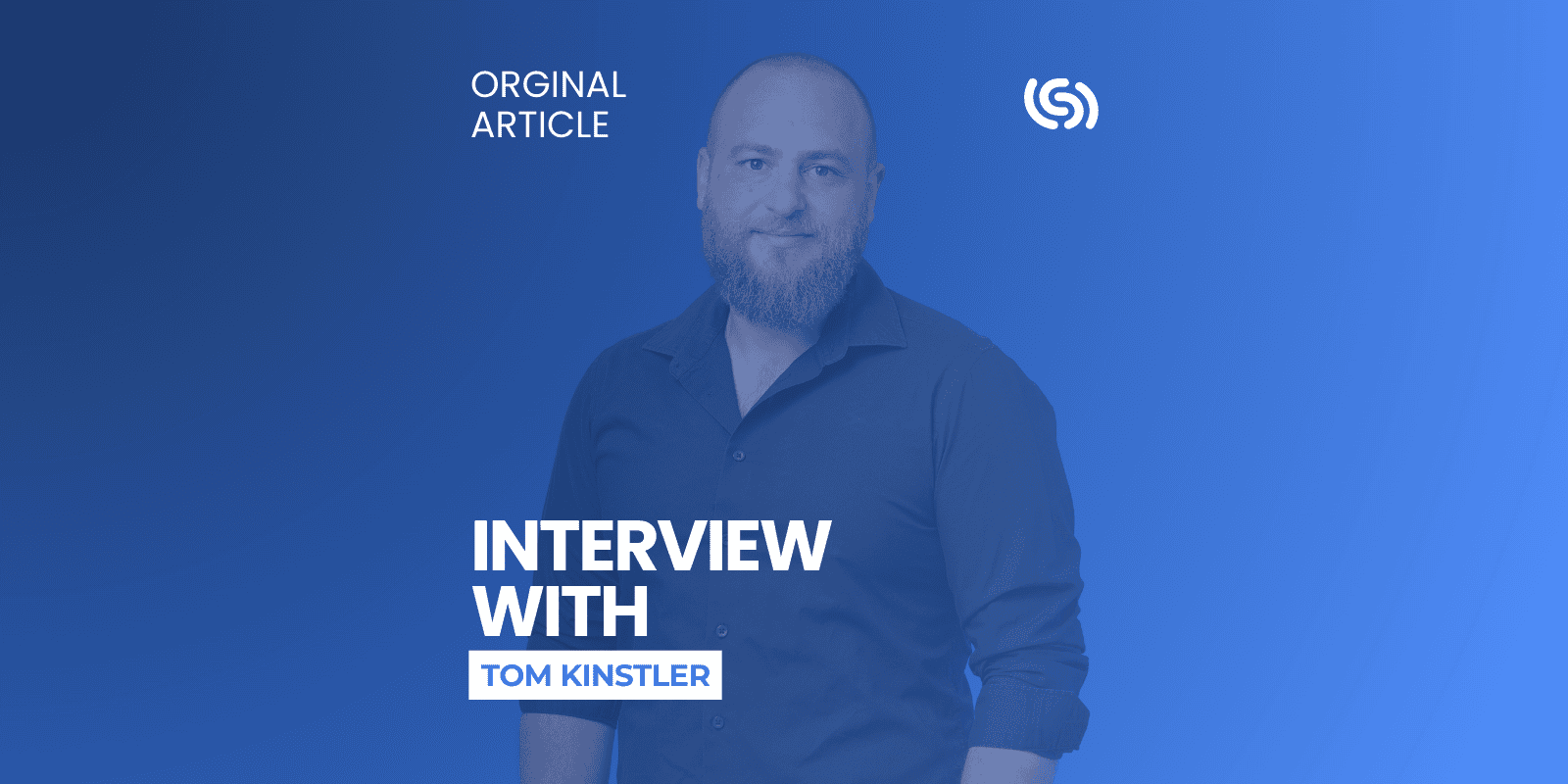
Interview with Daniel Greenberg
Welcome to our new staff highlight blog series! In this series, we’ll be interviewing some of the key members of the Lexsynergy team...
1 Feb 2023
Read now



In this interview, we speak with Matthieu Aubert, Lexsynergy’s Chief Strategy & Advisory Officer, about his journey into the domain name and online brand protection industry, the trends reshaping the landscape and why domain strategy is becoming a critical part of wider business decision making.
From governance and trust to evolving online threats and the future of digital identity, Matthieu shares a thoughtful and pragmatic perspective on what organisations need to prioritise over the next few years and what excites him most about Lexsynergy’s next chapter.

My journey into the domain name and online brand protection industry sits at the intersection of two long-standing interests: technology and law.
From an early age, I was fascinated by how systems work. I built computers, experimented with programs, and set up networks, initially through gaming, but always with a deeper curiosity about structure and logic. Over time, this evolved into a broader interest in governance: how rules are defined, how authority is exercised, and how complex systems remain coherent.
This naturally shaped my academic path. I completed two Master’s degrees in law, specialising in intellectual property and business-oriented IP advisory. The domain name and online brand protection space brought everything together. It deals with identity, control, and trust in the digital environment, at the crossroads of legal frameworks, technology, and strategy. That combination is what drew me to the industry and continues to motivate my work today.
Rather than evolving within a single discipline, I’ve worked across legal, strategic, and operational functions throughout my career.
I’ve been involved in advisory work, service design, sales enablement, and the delivery of expert services, while also managing projects alongside technical, development, and engineering teams. This gave me a very concrete understanding of how strategic decisions translate into operational reality, and where they often break down.
As a result, my approach is deliberately end-to-end and pragmatic. I focus on strategies that are legally sound, technically achievable, and commercially relevant. In my current role, this allows me to act as a bridge between disciplines, align stakeholders around a shared vision, and ensure that strategy remains actionable and scalable over time.

What attracted me to Lexsynergy is that I’ve known the company since its early days and followed its evolution over time. From the outset, Lexsynergy has maintained a clear positioning built on independence, strong values, and deep expertise in the domain name ecosystem.
What truly differentiates Lexsynergy is its clarity. There is no unnecessary complexity or sales-driven ambiguity, just robust tools, strong expertise, and advice that is direct, transparent, and aligned with clients’ real needs.
Lexsynergy does not operate as a traditional service provider. The relationship with clients is built as a partnership, regardless of size or profile. The focus is on long-term collaboration and shared objectives, acting as a trusted advisor rather than a simple executor. This philosophy strongly resonates with my own values and made joining Lexsynergy a natural choice.
One major trend is the growing diversity and sophistication of online infringements. Brands are no longer facing isolated risks, but a constantly evolving mix of domain abuse, misuse of digital identifiers, and increasingly structured attack patterns. This requires continuous adaptation in how threats are analysed and prioritised.
At the same time, domain names and online presence have become core business assets rather than technical considerations. With the expansion of the internet and new rounds of domain extensions on the horizon, the challenge is no longer just protection, but control: maintaining visibility, consistency, and governance across an expanding digital footprint.
The key shift is the demand for a more holistic and rationalised approach. Clients are looking for partners who can help them anticipate risks, prioritise actions, and keep complexity and costs under control, while ensuring their digital presence remains secure and coherent
On the challenge side, we are already seeing the industrialisation of online attacks, increased automation, and growing complexity driven by malicious use of technology and AI. At the same time, the continuous expansion of digital channels is increasing the surface area organisations need to manage and protect.
Another challenge lies in evolving regulatory and technical frameworks. Developments such as GDPR or the transition from WHOIS to RDAP are often oversimplified. While designed to improve privacy or efficiency, they can reduce transparency and complicate cooperation between stakeholders, making rights enforcement more complex.
These changes also create significant opportunities. They push the industry to rethink service models, develop smarter tools, and better combine technology, data, and expertise to support anticipation and decision-making.
New domain extensions and the continued evolution of the domain name space also offer brands greater strategic control over their digital territory. Used properly, they can reshape not only protection strategies, but also visibility, communication, and digital identity.
A common misconception is to see domain name strategy and online brand protection as purely defensive or reactive activities.
In reality, domain names are fundamental assets. They sit at the intersection of identity, governance, communication, and trust. Without a clear strategy, organisations tend to accumulate domains without coherence, react to incidents rather than anticipate them, and generate unnecessary complexity and cost.
It is also important to recognise that domain names remain the foundation of the internet. Mobile applications, platforms, APIs, and emerging technologies all ultimately rely on domain names to function. While usage models continue to evolve, the underlying system remains essential.
As a result, domain name strategy and online brand protection are more relevant than ever in the era of Web2 platforms, Web3 technologies, and artificial intelligence. Effective protection is not about registering everything or enforcing everywhere, but about making informed, proportionate decisions aligned with business priorities.
Organisations should move away from treating domain portfolios as static inventories. A domain portfolio is a living component of digital strategy, closely tied to brand architecture, governance, and communication objectives.
The focus should shift from volume to intent: understanding which domains actively support the business, which protect critical assets, and which no longer add value.
When managed strategically, a domain portfolio becomes a tool for control and resilience. It supports visibility, reduces risk, and enables informed decisions around protection, expansion, and cost management. Domains are not just technical resources; they are strategic levers for structuring and securing digital presence.
I make a conscious effort to step back before acting. Rather than jumping straight to solutions, I focus on understanding purpose, constraints, and long-term implications.
I believe strategy is less about having quick answers and more about asking the right questions. Understanding why something exists, who it serves, and how it fits into a broader system helps ensure decisions remain coherent, adaptable, and durable over time.
People are often surprised to learn that I’m very comfortable with ambiguity. While my work involves structure and governance, I enjoy situations where things are not yet fully defined.
I also have a strong passion for music. Although I no longer play an instrument, singing remains an important creative outlet for me whenever I can. It offers a different way of thinking, one that values listening, balance, and nuance, which complements my professional approach.
What excites me most is the combination of strong foundations and forward momentum. Lexsynergy has built clear values, deep expertise, and trusted client relationships, while remaining agile and open to evolution.
The opportunity ahead lies in reinforcing our strategic and advisory role, helping clients navigate increasing complexity with clarity and confidence. As the digital landscape evolves, Lexsynergy is uniquely positioned to connect governance, protection, and long-term digital strategy in a pragmatic, client centric way.
Being part of shaping this next phase, refining our offering, innovating responsibly, and strengthening our role as a trusted partner, is what motivates me most.
Welcome to our new staff highlight blog series! In this series, we’ll be interviewing some of the key members of the Lexsynergy team...

Elad Kinstler is our COO and has been with Lexsynergy since the very beginning...