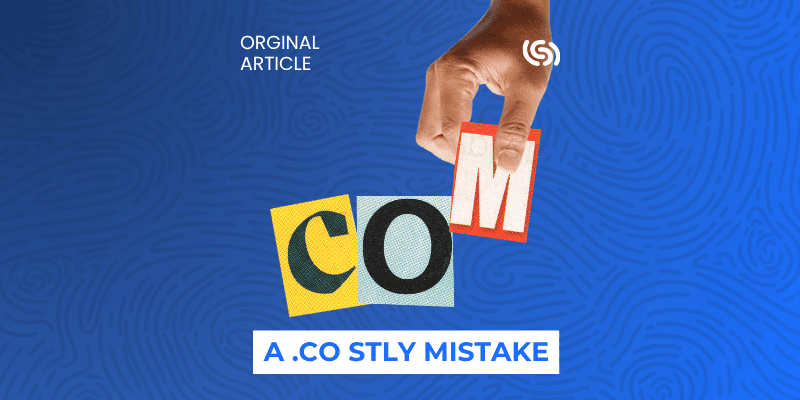
A .CO stly Mistake
That tiny missing “m” has the potential to lead your customers to a completely unrelated site, a competitor, or a scam, all of which could have been avoided.
26 Nov 2025
Read now


Domain name policy changes are often discussed in terms of accessibility and market expansion. However, in an environment where small technical details can have outsized consequences, such changes can also reshape brand risk in subtle, but important ways.
Typographical errors remain a persistent feature of user behaviour online. When those errors intersect with changes to the availability of closely resembling domain extensions, the implications extend beyond simple navigation mistakes. They can affect consumer trust, security and brand reputation.

Historically, the .om country code Top Level Domain (ccTLD) was subject to relatively strict registration requirements. Foreign companies were typically required to hold a matching trade mark and domain names were expected to closely align with that trade mark or the registrant’s company name. These constraints significantly limited who could register .om domains and, in practice, kept overall registration volumes low.
That position has now changed.
Foreign entities can register .om domains without submitting a matching trade mark, and domain names no longer need to exactly reflect the registrant’s legal or brand name. While registrations remain subject to checks against existing trade marks registered in Oman, the overall threshold for eligibility has been lowered.
From an access perspective, this represents a meaningful shift. From a brand protection perspective, it also increases the pool of potential registrants, including those whose intentions may not align with the interests of brand owners or end users.
Typographical errors are a well documented and predictable aspect of user behaviour. They occur frequently, particularly when users type quickly, use mobile devices, or rely on muscle memory when entering familiar domain names. Errors are especially common at the end of a domain string, where users may omit or mistype letters without immediately noticing.
For brands operating on .com, this creates an inherent vulnerability when alternative domain extensions exist that differ by only a single character. The .om extension fits squarely within this risk profile. Visually and structurally, it differs from .com by the omission of a single letter, a mistake that is unlikely to be intentional in most cases. Instead, it closely mirrors the type of accidental input errors that have historically been exploited for traffic diversion, phishing and impersonation.
While such risks have long been recognised in principle, the recent .om policy change opens a whole new namespace for this type of exploitation be conducted on. The reduced barriers to registration increases the likelihood that typo variants of established .com domains will be registered and actively used, transforming a theoretical concern into a more tangible risk.
The risks associated with .om typosquatting are not merely hypothetical. A well documented real world example involved the impersonation of the streaming platform Netflix, through the registration of netflix.om.

In 2016, multiple media outlets and security researchers reported that users who accidentally typed netflix.om instead of netflix.com were redirected to a third-party website not operated by Netflix. Rather than returning an error page, the domain resolved successfully and led visitors through a series of misleading pages containing intrusive pop-ups and prompts designed to persuade users to download fake software updates, a common technique used to distribute malware and adware.
The effectiveness of this tactic relied entirely on predictable user behaviour. Netflix is a high-traffic, widely recognised brand and users frequently navigate to its website directly by typing the domain name into a browser. Omitting the letter “c”, was enough to divert users to a domain that appeared functional, despite having no legitimate connection to the brand.
This incident highlights a key aspect of typo-based abuse: users may not immediately recognise that they have landed on an unintended site, especially when the domain resolves normally and presents content designed to appear plausible or even mimic the legitimate website. In such cases, the reputational and security implications extend beyond lost traffic, potentially exposing users to harm while associating that experience, however indirectly, with the brand they intended to reach.
Although the Netflix.om case predates the recent changes to .om registration policy, it remains highly relevant. It demonstrates how .om domains can be used to exploit simple typing errors and why increased accessibility to the extension warrants renewed attention from brand owners operating on .com.
For many brand owners, the risks posed by .om will feel familiar. A comparable situation has existed for years with the .co extension (ccTLD for Colombia), which again differs from .com by just a single missing letter (m) and has long been recognised as a common typographical error.
As .co became more widely available, it quickly attracted attention not only from legitimate users seeing it as an abbreviation for company, but also from those seeking to exploit typing mistakes. Brand impersonation, traffic diversion, phishing and misleading advertising became well documented issues, particularly for high-traffic consumer brands. In response and per our advice, many organisations adopted defensive registration strategies, securing their .co equivalents as a preventative measure rather than relying solely on expensive enforcement after misuse occurred.
The relevance of this precedent lies not in the extensions themselves, but in the underlying pattern. Where a domain string closely resembles .com, differs by a single character and becomes more accessible, misuse tends to follow predictable lines. The evolution of .co demonstrated that brand owners cannot rely on user accuracy alone to protect their digital presence.
Viewed through this lens, the recent changes to .om registration policies place it squarely within a risk category that brand owners have encountered before and fortunately, the process of preventive protection has already been established.
As with other forms of domain related abuse, addressing risk after misuse has occurred is often more complex, time-consuming and costly than preventing it in the first place.
Recovering or suspending an abusive domain can involve legal action, domain dispute proceedings, or coordination with registries and hosting providers, all of which take time and may not fully mitigate reputational damage or user harm. In contrast, defensive registration, for an identical match to the trade mark, provides a proactive means of reducing exposure to risk before abuse occurs.
For many organisations, this does not require blanket registration across every available extension. Instead, it involves maintaining a domain strategy that reflects how users behave, how policies evolve and where brand risk is most likely to emerge. Changes such as the recent liberalisation of .om are a clear example of why domain portfolios should be reviewed regularly, rather than treated as static assets.
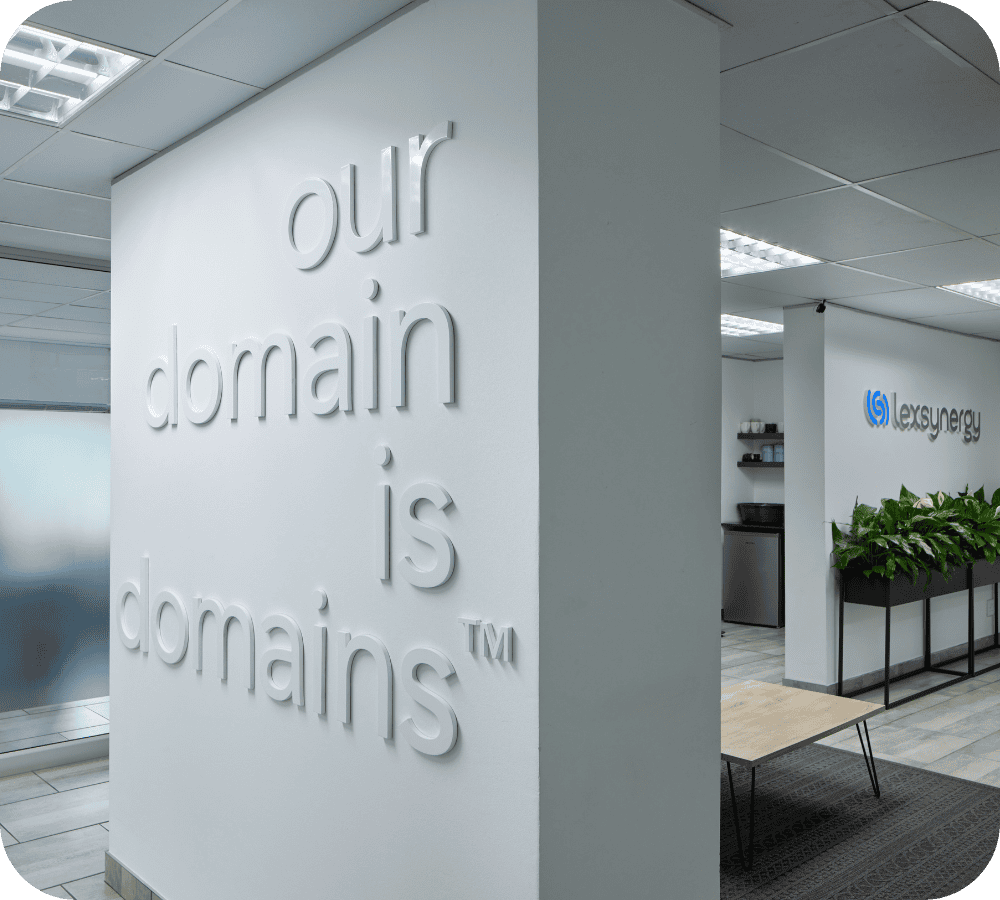
At Lexsynergy, strategic domain management is at the core of how we help brands protect their intellectual property online. We work with organisations to develop bespoke, ongoing domain strategies that monitor policy changes and identify emerging risks, ensuring portfolios evolve alongside the global domain landscape.
For brands seeking clarity, an initial domain portfolio health check can help assess current coverage, highlight potential vulnerabilities and identify any existing infringements. This approach enables informed decisions based on real-world risk, rather than reactive enforcement after harm has occurred.
The recent liberalisation of .om domain registration represents a meaningful shift in how the extension can be accessed and used. While this change creates opportunities for legitimate registrants, it also alters the risk profile for brands operating on .com.
As the Netflix.om case illustrates, the exploitation of simple typographical errors is neither new, nor hypothetical. What has changed is the accessibility of an extension that closely resembles the most widely used domain extension globally, .com.
In light of this and consistent with long-established best practice around similar extensions such as .co, we advise that brand owners operating their primary online presence on .com should register the corresponding .om and .co domains as part of a balanced defensive domain strategy.
For companies seeking a more comprehensive, bespoke approach to safeguarding their intellectual property online, Lexsynergy provides ongoing domain strategy and management services designed to identify risk and take enforcement action where necessary. To discuss an initial health check of your domain portfolio, please contact us using the form below.
That tiny missing “m” has the potential to lead your customers to a completely unrelated site, a competitor, or a scam, all of which could have been avoided.
Cut out the middlemen, lower your costs and gain access to difficult domain extensions.
Elevate Your Domain Strategy with Cost-Effective, Business-Focused Solutions.