
Corporate Registrars vs Retail Registrars
What is the difference and which should you be using?
13 Dec 2023
Read now


Domain names are foundational to how organisations operate online. They control access to websites, email, applications and digital identity. Because of this centrality, domains are increasingly targeted by attackers and are subject to growing regulatory and operational scrutiny.
This article explains what makes a domain platform secure, why these controls matter, and how corporate grade domain registrars differ from consumer focused providers.
Domains are attractive targets because they offer disproportionate impact. A single unauthorised change can redirect web traffic, intercept email, enable phishing, or disrupt business critical services. Unlike many IT systems, domain changes often propagate globally within minutes, leaving little room to recover from mistakes or malicious actions.
As organisations grow and manage larger domain portfolios, this risk increases. Multiple users, third party vendors and automated systems all interact with domain infrastructure. Without strong controls and robust security protocols, this complexity creates opportunities for error and abuse.
It is important to distinguish between platform security and provider security.
A secure domain platform refers to the technical capabilities built into the system itself. These are controls that exist regardless of who operates the platform. They define what the platform can enforce, log, restrict or recover from.
A secure domain provider, by contrast, refers to how that platform is operated, governed and supported. This includes human processes, verification procedures, ancillary services, monitoring and response capabilities. Even the most secure platform can introduce risk if it is poorly operated.
Corporate grade domain security requires both: a platform with security embedded by design and a provider that applies those controls consistently and rigorously. This distinction is particularly important for organisations managing large, distributed domain portfolios where operational failure can have immediate global impact.
Identity and access management is one of the most important security layers in any domain platform, because the majority of domain incidents originate from unauthorised or excessive access, rather than software vulnerabilities. When access controls are weak, attackers do not need to bypass technical safeguards, they simply log in.
A secure domain platform uses multiple, complementary access controls to reduce this risk.
Single Sign On allows users to authenticate to the domain platform using a central corporate identity provider rather than a standalone username and password. Rather than logging in with a newly created username and password, users authenticate using the same corporate credentials they use for other business systems. In practice, this means access is governed by the organisation’s existing identity policies, including password standards, device trust and user lifecycle management.
From a security perspective, SSO reduces risk in two ways. First, it eliminates weak or reused passwords that often occur when users manage separate credentials. Second, it ensures that when an employee leaves an organisation or changes role, access to the domain platform can be revoked immediately through the central identity system. This reduces the risk of orphaned accounts retaining access to critical domain assets.
Two-factor authentication requires users to provide a second form of verification in addition to their password, such as a time-based code sent to a dedicated email address, phone number, or authentication app. Even if credentials are compromised through phishing or data breaches, 2FA makes it significantly harder for attackers to gain access.
For domain platforms, this protection is especially important because access often enables high impact actions, such as modifying DNS records or initiating transfers. 2FA acts as a safeguard against credential theft and is widely recognised as a baseline control for protecting administrative systems.
Role Based Access Control (RBAC) ensures that users can only perform actions that are appropriate to their role within the organisation. Instead of granting broad, all-purpose access, permissions are assigned based on defined roles, such as DNS management, billing, or portfolio administration.
This approach reduces risk by limiting the potential impact of both human error and malicious activity. If a user account is compromised, the attacker’s ability to make harmful changes is constrained by the role assigned to that account. RBAC also supports operational governance by making it clear who is authorised to perform sensitive actions and by preventing privilege creep over time.
Session controls govern how long users remain logged in and from where they can access the platform. These controls typically include automatic session timeouts, restrictions on concurrent sessions, and optional IP address whitelisting.
From a security standpoint, session restrictions reduce the window of opportunity for misuse. Automatic timeouts prevent unattended sessions from being exploited, while IP restrictions limit access to known, trusted networks. With IP restrictions in place, someone could only gain access to even login to the platform if they are on designated whitelisted IP addresses. Together, these controls reduce the likelihood that valid credentials can be abused outside of approved environments.
Individually, each of these controls reduces a specific type of risk. Together, they form a layered identity security model that protects domain platforms from the most common and damaging attacks. For organisations managing large domain portfolios, strong identity and access management is not optional, it is a foundational requirement for maintaining control, accountability and trust.
Insecure platforms often treat domain changes as temporary configuration actions rather than permanent business records. This creates problems during incidents, audits and compliance reviews.
A secure platform maintains immutable historical audit trails showing exactly what was changed, when it was changed and by whom. This is not just a security benefit. It supports internal investigations, regulatory requirements and operational learning by allowing teams to understand how and why issues occurred.
Rollback capabilities further reduce risk by allowing organisations to reverse changes quickly when errors or unexpected outcomes occur.
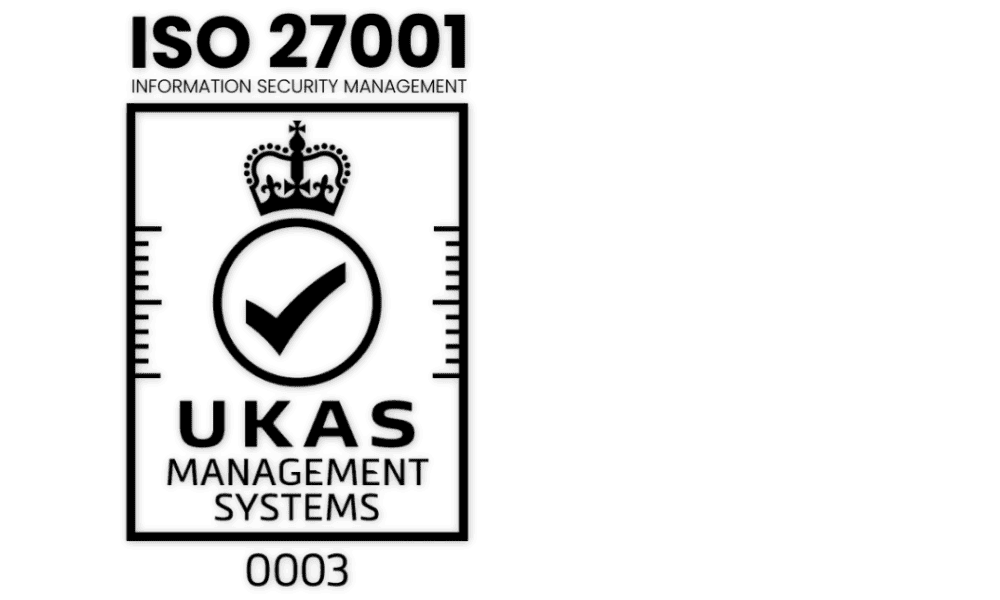
Security claims are difficult to evaluate without external validation. Recognised frameworks such as ISO 27001 and Cyber Essentials provide structured approaches to managing information security and operational risk.
Compliance with data protection regulations, such as GDPR and other recognised security assurance frameworks, further demonstrates that personal and organisational data associated with domain management is handled responsibly.
Regular penetration testing and independent audits help ensure that security controls are not just documented but actively maintained and tested against real world threats.
A secure domain platform establishes the technical foundation for protecting domain assets, but platform security alone does not address all risks. Many of the most damaging domain incidents occur not because a system lacks features, but because security controls are poorly applied, insufficiently monitored, or unsupported when something goes wrong.
For this reason, organisations managing business critical or large scale domain portfolios increasingly look beyond platform capabilities and assess whether their domain provider itself is security minded. A corporate grade provider complements their platform with a suite of services designed to reduce operational, procedural and external threats.
Registrar Lock and Registry Lock are among the most effective safeguards against domain hijacking, particularly for high value domains.
Registrar Lock prevents unauthorised domain transfers by disabling automated transfer requests. This ensures that even if credentials are compromised, domains cannot be moved without additional validation.
Registry Lock adds an additional layer of protection by placing restrictions directly at the registry level. When enabled, any change to the domain, including nameserver updates, transfers, or deletions, requires manual, out-of-band verification. These checks are intentionally rigorous and cannot be bypassed through standard account access or APIs.
The security benefit of domain locking lies in its ability to prevent irreversible actions, rather than merely alerting after damage has occurred. Learn more about how domain locking supports corporate domain security and large scale domain portfolio management.
DNSSEC protects the integrity of DNS responses by ensuring that the information returned to users has not been altered or forged. Without DNSSEC, attackers can exploit weaknesses in DNS resolution to redirect traffic or intercept communications without obvious signs of compromise.
A security focused provider not only supports DNSSEC, but manages it comprehensively across registries and DNS infrastructure. This includes correct key management, rollover procedures and compatibility with multiple TLD policies.
By cryptographically validating DNS data, DNSSEC helps maintain trust in online services and reduces the risk of silent, difficult to detect attacks that can undermine customer confidence and brand reputation.
Anycast DNS improves both availability and security by distributing DNS queries across a globally dispersed network of servers. Instead of relying on a single location, traffic is automatically routed to the nearest available node.
From a security perspective, this architecture mitigates the impact of Denial of Service attacks (DoS) by absorbing malicious traffic across the network. From an operational perspective, it improves performance and resilience for users worldwide.
A provider offering Anycast DNS as part of its suite of services demonstrates an understanding that DNS availability is not just a performance consideration, but a core component of business continuity and risk management.
Domain related incidents do not follow business hours, in fact, they actively target out-of-hours and delays in response can significantly increase impact.
A security minded domain provider offers 24/7/365 support delivered by teams with domain specific expertise. This ensures that high risk situations, such as suspected hijacking attempts, DNS outages, or abuse incidents, are handled promptly and correctly.
Continuous support reflects operational maturity and recognises that domains are critical infrastructure components that require constant oversight, not best-effort assistance.
Securing an organisation’s existing domain portfolio is a necessary foundation, but it does not address the full scope of digital brand risk. Many threats originate outside of the domains an organisation owns or controls. Attackers frequently imitate legitimate brands to support phishing campaigns, fraud, counterfeit sales and customer deception. These activities often exploit customer trust in established brands, amplifying both financial and reputational harm.

Online brand protection services are designed to address this broader threat landscape. Rather than focusing solely on owned assets, they monitor the wider internet for indicators of brand misuse, including infringing domain registrations, unauthorised social profiles, messaging channels and fraudulent marketplace listings.
A domain provider offering integrated online brand protection services is able to analyse this activity in context, distinguish between legitimate and malicious use and take appropriate enforcement action. This may include coordinated takedowns, domain suspensions and content removal requests.
The security benefit of this approach lies in early detection and coordinated response. By identifying infringing activity quickly, organisations can reduce the likelihood of customer harm, reputational damage and regulatory exposure. Enforcement also acts as a deterrent, making a brand a less attractive target to would-be infringers over time.
From a governance perspective, working with a provider that combines domain management and online brand protection creates a more coherent security model. Instead of treating brand abuse as a separate, reactive function, it becomes part of an integrated, proactive strategy that protects both existing assets and the broader digital presence of the organisation.
Lexsynergy’s online brand protection services are designed with this holistic view in mind, supporting organisations not only in securing their current domains, but in identifying and enforcing against brand misuse wherever it appears online. Alongside this, Lexsynergy provides domain strategy, advisory and policy services to help clients define how these functions are managed, governed and communicated internally. This integrated capability is increasingly important for organisations that view domain security and online brand protection as interconnected components of digital risk management.
Each of these services addresses a different category of domain risk. Locks protect ownership, DNSSEC and Anycast protect resolution and availability, monitoring detects misuse, and round-the-clock support enables rapid response.
Together, they form a protective layer that complements the underlying platform. This combined approach reflects how enterprises manage security in practice: through layered controls, active oversight and experienced operational support.
While a secure platform defines what is technically possible, a security minded provider determines how effectively those capabilities are applied in real world conditions.
The distinction between corporate grade and non-corporate grade (retail) registrars becomes clear when comparing how security, scale and governance are handled.
Feature | Corporate Grade Registrar | Retail Registrar |
Portfolio focus | Designed for large, multi-TLD portfolios | Designed for individual domains |
TLD Accreditations | Direct accreditations remove middlemen, reducing third party risks. | Accredited through third party |
Management Model | Centralised, policy driven control | Decentralised, user driven control |
Access control | Enforced RBAC, SSO, 2FA, session policies | Single-user or shared access |
Auditability | Full historical audit trails and change logs | Limited or no audit history |
Transfer protection | Registrar Lock and Registry Lock supported | Basic transfer locks only |
Compliance alignment | ISO, Cyber Essentials, GDPR aligned operations | Minimal or no compliance support |
DNS security | DNSSEC, monitoring, rollback, resilience | Basic DNS hosting |
Abuse monitoring | Active monitoring and enforcement services | Reactive or unsupported |
Domain security is not achieved through a single feature or service. It is the result of a secure platform, operated by a provider that understands the operational, regulatory and reputational importance of domains.
Organisations that treat domains as critical business infrastructure increasingly look for registrars that combine strong technical controls with rigorous processes, human verification and continuous monitoring.
Lexsynergy’s domain platform and services are designed around these principles, supporting organisations that require high levels of security, governance and control across global domain portfolios. For global businesses that take domain security seriously, working with a provider aligned to these standards is an essential part of managing digital risk.
What is the difference and which should you be using?
Elevate Your Domain Strategy with Cost-Effective, Business-Focused Solutions.
Operational support | Named account managers and 24/7 human support | 'Best-effort' support |
Governance | Clear lifecycle visibility and controls | Limited lifecycle oversight |
Corporate grade registrars are not defined by marketing claims, but by the presence and consistent application of these capabilities at scale.
Periodically review your Lexsynergy account setting to make sure your account is as secure as it can be:.